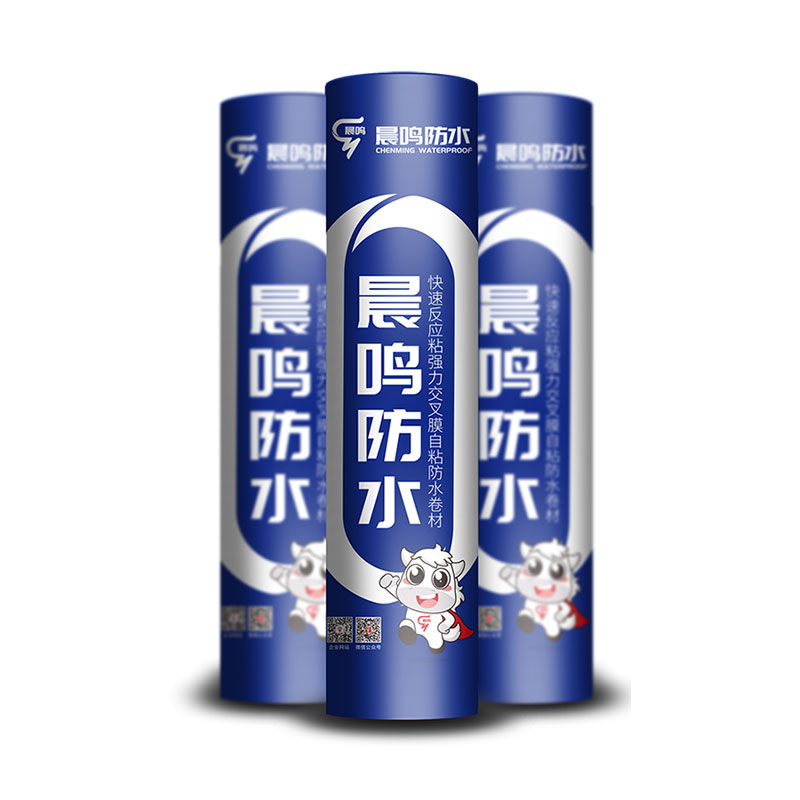







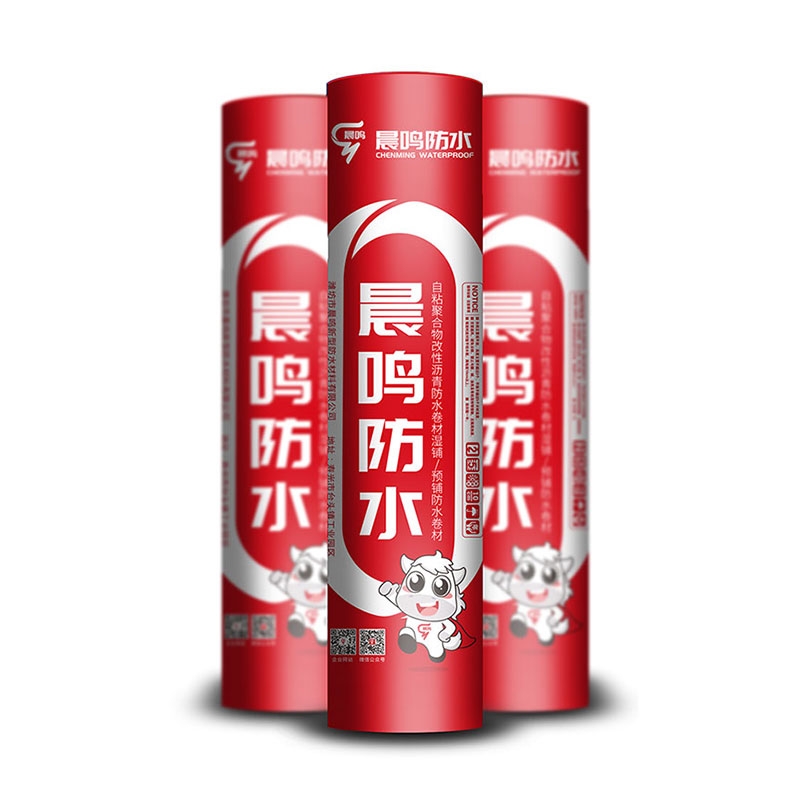
Wet-laid waterproofing membrane
Product Overview
Self-adhesive polymer modified bituminous waterproofing membrane (hereinafter referred to as Type N) uses synthetic rubbers such as SBS, high-quality road asphalt and tackifiers as the base material. It is a self-adhesive polymer modified bituminous waterproofing membrane made with polyester film (PET), polyethylene film (PE), aluminum foil or silicon-coated release film as the surface material, and the lower surface covered with a silicon-coated release film as the bonding layer.
Self-adhesive polymer modified bituminous polyester tire waterproofing membrane (hereinafter referred to as Type PY) uses long-fiber polyester felt as the tire base, self-adhesive polymer modified asphalt as the impregnating and coating material. The upper surface is covered with polyethylene film, fine sand, aluminum foil, self-adhesive polymer modified asphalt or silicon-coated release film as the isolation layer, and the lower surface is coated with self-adhesive asphalt or silicon-coated release film.
Wide-width self-adhesive pre-paved polyester tire waterproofing membrane (hereinafter referred to as pre-paved Type PY) uses the coating material of the waterproofing membrane as the main material (forming a self-adhesive waterproof layer), with silicon-coated release films that can be peeled off coated on both sides as the isolation material, thus made into a functional waterproofing membrane.
Wide-width self-adhesive polymer pre-paved waterproofing membrane (hereinafter referred to as pre-paved Type P) uses ethylene-vinyl acetate (EVA) and high-density polyethylene (HDPE) homogeneous sheets as the main material, with a self-adhesive layer coated on the surface, and then covered with a silicon-coated release film to make a polymer self-adhesive waterproofing membrane. According to engineering needs, geotextiles can be compounded on the polymer sheet to strengthen the strength of the membrane. The reinforced tire waterproofing membrane uses asphalt-based polyester tire waterproofing membrane as the main material (with functional additives added), with a self-adhesive layer coated on one or both sides, and a peelable silicon-coated film can be used as the isolation material to make a wet-laid waterproofing membrane.
Product Classification
| Tire Base | Upper Surface Material | Product Performance | Thickness | Width | Area |
|---|---|---|---|---|---|
| Without Tire Base (Type N) | Polyethylene Film (PE) | Type Ⅰ | 1.2mm | 1000mm | 10m² 15m² 20m² 30m² |
| Polyester Film (PET) | 1.5mm | ||||
| Film-free Double-sided Self-adhesive (D) | Type Ⅱ | 2.0mm | |||
| Polyester Tire Base (Type PY) | Polyethylene Film (PE) | Type Ⅰ | 2.0mm | ||
| Fine Sand Surface (S) | Type Ⅱ | 3.0mm | |||
| Film-free Double-sided Self-adhesive (D) | 4.0mm |
| Serial Number | Item | Ⅰ | Ⅱ | D | ||
|---|---|---|---|---|---|---|
| PE | PET | PE | PET | |||
| 1 | Tensile Strength (N/50mm) ≥ | 150 | 200 | 200 | 150 | - |
| Elongation at Maximum Tensile Strength (%) ≥ | 250 | - | 30 | 200 | - | |
| Heat Resistance Elongation (%) ≥ | - | 250 | - | 150 | 450 | |
| 2 | Heat Resistance | No separation between the coating layer and the tire body before the specified fracture during stretching | ||||
| 3 | Nail Rod Tear Strength (N) ≥ | 60 | 110 | 70 | 40 | - |
| 4 | Low-temperature Flexibility (℃) | -20 | -30 | -30 | -20 | -20 |
| 5 | Water Impermeability (30min) | 0.2Mpa, impermeable for 120min | ||||
| 6 | Between Membranes (N/mm) ≥ | 1.0 | ||||
| Membrane and Base Layer (N/mm) ≥ | 1.5 | |||||
| 7 | Resistance to Static Water Pressure (MPa) ≥ | 0.3 | ||||
| 8 | Holding Power (min) ≥ | 20 | ||||
| 9 | Tensile Strength Retention Rate (%) ≥ | 80 | ||||
| Elongation Retention Rate at Maximum Tensile Strength (%) ≥ | 80 | |||||
| 10 | Low-temperature Flexibility (℃) | -18 | -28 | -18 | -28 | -18 |
| Heat Aging Maximum Tensile Strength Retention Rate (%) ≥ | 80 | |||||
| Elongation Retention Rate (%) ≥ | 30 (400% for asphalt coating layer elongation of Type D) | |||||
| 11 | Thermal Stability | No wrinkling, lack of glue, flowing, sliding | ||||
| 12 | Self-adhesive Asphalt Re-peeling Strength (N/mm) ≥ | 1.5 | 1.0 | 1.5 | 1.0 | |
| Serial Number | Item | Index | ||
|---|---|---|---|---|
| Ⅱ | Ⅰ | |||
| 1 | Soluble Content (g/m²) ≥ | 2.0mm | 1300 | - |
| 3.0mm | 2100 | - | ||
| 4.0mm | 2900 | - | ||
| 2 | Tensile Performance | 2.0mm | 350 | 600 |
| 3.0mm | 450 | - | ||
| 4.0mm | 550 | - | ||
| Elongation at Maximum Tensile Strength (%) ≥ | 30 | 80 | ||
| 3 | Heat Resistance | No sliding, flowing, dripping at 70℃ | ||
| 4 | Low-temperature Flexibility (℃) | -20 | -30 | |
| 5 | Water Impermeability | 0.3Mpa, impermeable for 30min | ||
| 6 | Peeling Strength (N/mm) ≥ | Between Membranes | 1.0 | 1.5 |
| Membrane and Plate | 1.5 | - | ||
| 7 | Resistance to Static Water Pressure (MPa) ≥ | 0.3 | ||
| 8 | Holding Power (min) ≥ | 20 | ||
| 9 | Heat Aging | Tensile Strength Retention Rate (%) ≥ | 80 | 80 |
| Elongation Retention Rate at Maximum Tensile Strength (%) ≥ | 30 | 40 | ||
| Low-temperature Flexibility (℃) | -18 | -28 | ||
| 10 | Thermal Stability | Appearance | No wrinkling, lack of glue | |
| Maximum Slip (mm) ≤ | 2 | |||
| 11 | Self-adhesive Asphalt Re-peeling Strength (N/mm) ≥ | 1.5 | 1.0 | |
Application Scope
- Waterproofing of non-exposed roofs and underground projects;
- Waterproofing of municipal projects such as fruit pools and swimming pools;
- Waterproofing of open-cut subway projects;
- Especially suitable for waterproofing projects where open flames cannot be used;
- Excellent low-temperature performance, suitable for use in cold regions.