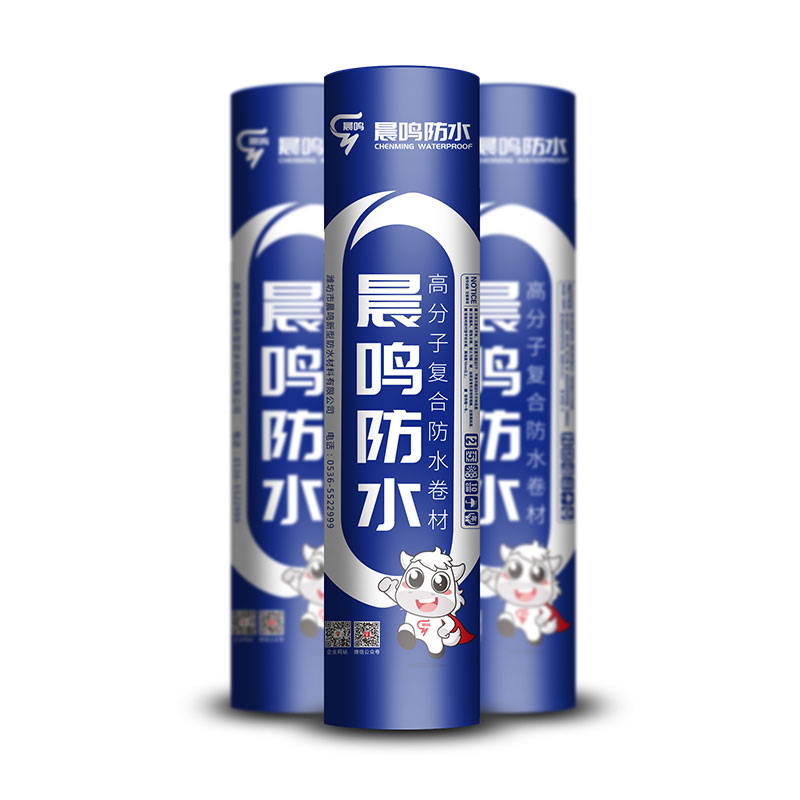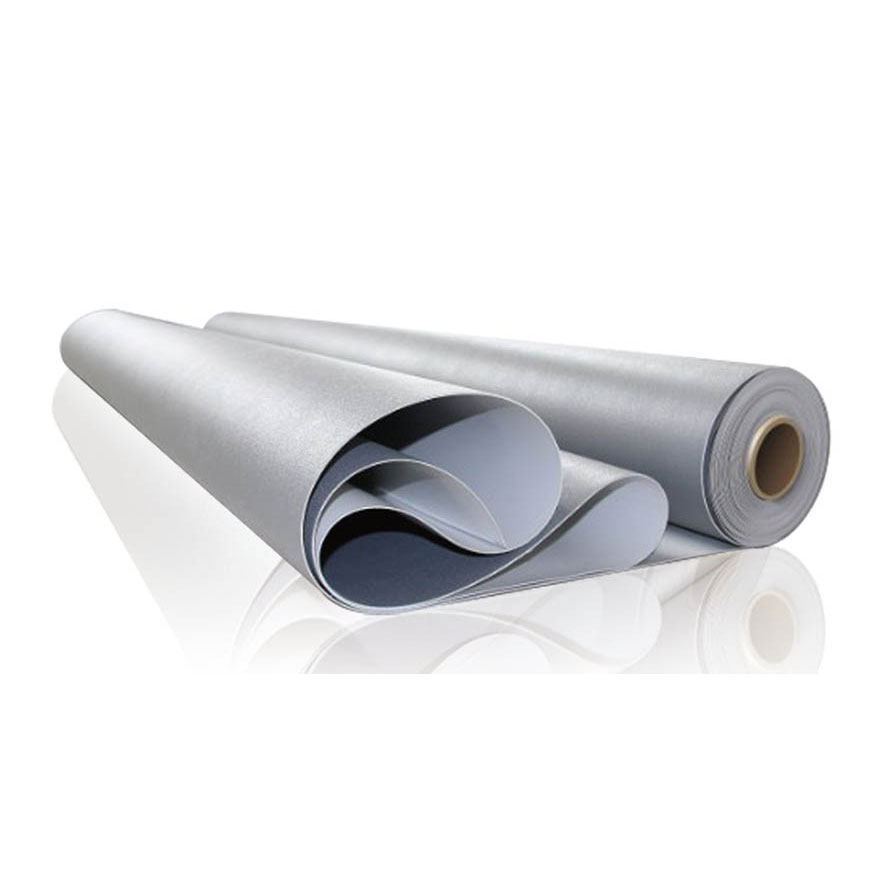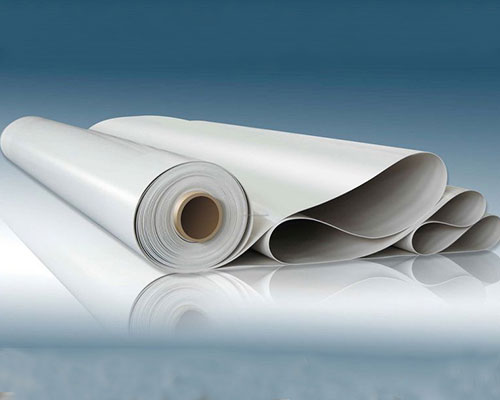







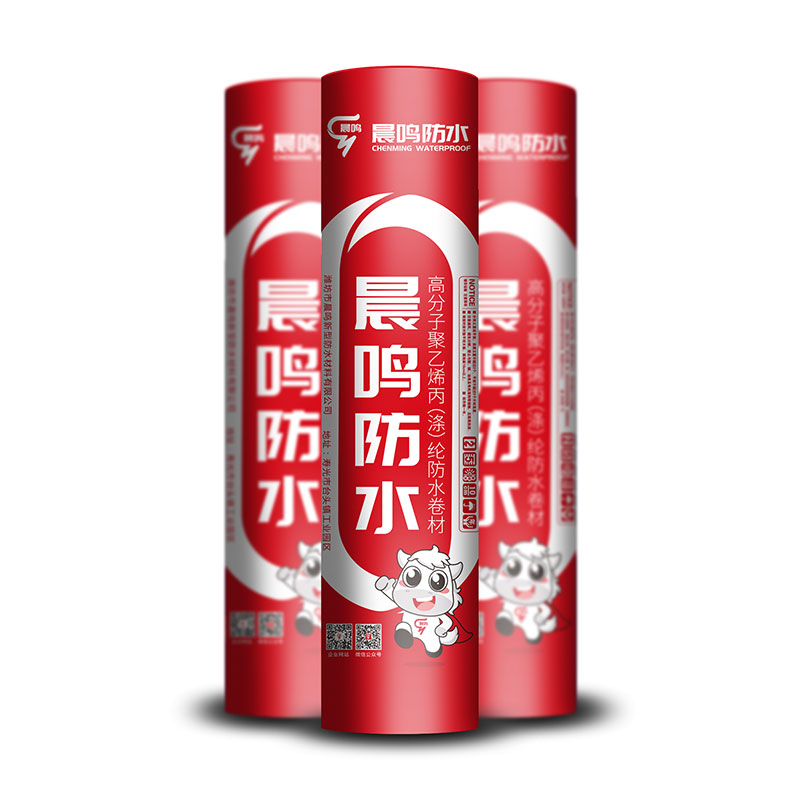
Polyethylene Propylene (Polyester) Waterproofing Membrane
Product Composition
Polyethylene propylene (polyester) fiber composite waterproofing membrane is mainly made of polypropylene non-woven fabric and polyethylene as the main raw materials, with additives added to improve performance, specially made as an enhanced protective layer. It is a composite waterproofing material integrating four layers of sheet materials: waterproof layer, waterproof reinforcement layer and bonding layer.
Application Range
It is suitable for waterproofing projects of various roofs, basements, tunnels and other buildings, roof and underground projects of agricultural buildings, water storage tanks, municipal administration, bridges, subways, tunnels and other engineering waterproofing, especially for key projects with high requirements for durability, corrosion resistance and subject to deformation.
Product Features
- The product is composed of different materials, so its performance is significantly improved. It completely changes the problem that the product with a single structure has an aging layer, greatly improving the service life of the product, which can reach more than 50 years.
- The upper and lower surfaces of the product are rough, and the non-woven fibers have an irregular cross structure, forming three-dimensional mesh holes, which make it have high tensile strength, strong puncture resistance, good low-temperature flexibility and large expansion coefficient. It can be used in combination with a variety of adhesives, and the bonding effect is good.
- The product has good adhesion with cement. Cement slurry can be used as an adhesive. The cement slurry can directly enter the mesh holes on the surface of the membrane and integrate with the cement as it sets. The cement slurry has no problems such as aging, mildew and hydrolysis, so the bonding is permanently firm and does not peel off.
- After the construction of the product is completed, the waterproof surface can be directly decorated (such as pasting ceramic tiles, floor tiles, mosaics, applying cement, etc.).
- The construction process of this product has no special requirements for the base course of the leveling layer and the moisture content. Construction can be carried out as long as there is no standing water, and the construction quality is reliable.
- This product is a green and environmentally friendly polymer waterproofing material, which is a non-toxic and odorless green environmental protection product series.
Product Specifications
- Specification: 400g/m² - 1200g/m²
- Size: width 1200mm, 1500mm
- Color: can be produced in any color according to customer requirements
Construction Technology
Inspect the leveling layer → clean the base course → prepare cement adhesive → make the additional layer → paving construction → protective layer → maintenance
First, spread the membrane in advance and align it, then fold and roll up both ends of the membrane. Pour the prepared cement adhesive onto the base course and spread it evenly with a scraper. Then push and spread the membrane forward, and timely use the scraper to remove the air left inside the membrane and scrape out the excess adhesive. The bonding rate between the membrane and the leveling layer: 85% for seam pasting.
The isolation layer, waterproof layer and additional layer all adopt the lap joint method, bonded with cement adhesive, with a width of 10cm. The joints of the additional layer and the waterproof layer are staggered by more than 5cm.
The lap width of wall materials is 8 - 10cm on the side and 10 - 15cm on the side edge. The joints of adjacent sheets are staggered by more than 100cm. The angle between the wall root and the ground is more than 30cm.
After the membrane is paved and pasted, a 2cm thick 1:2.5 cement mortar protective layer is made on the waterproof layer, which is applied in two times. The joints of the two layers must be staggered by more than 20cm. The protective layer should be smooth and compacted, and watered for maintenance.
When the polymer polypropylene (polyester) fiber waterproofing membrane is pasted with the main structure, special matching cement materials are added as adhesives.
Waterproof layer: When applying, special attention should be paid to the bonding surface and bonding strength between the membrane and the leveling layer, which is the key technology to ensure the waterproof effect and waterproof life.
When applying the membrane, it should be after the base course of components including the coping to prevent bulging. Under rainless conditions, use the adhesive to wet the bonding surface of the membrane. The membrane in the wall should exceed the designed water level. After the membrane is pasted, it should be ensured that the wall surface construction is carried out after the base course is hardened. Before interior decoration, the ground surface layer should have a 1.5% slope for drainage. Attention should be paid to the thickness of the ground waterproof layer to ensure the stability of the ground.
For the membrane applied to the inner wall of the basement (non - bathroom wall), special adhesive cement slurry is used, and the bending height of the wall membrane is not less than 200mm.
When used for low-temperature air barrier, single-sided composite membrane can be used. Its pasting and laying are the same as roof waterproofing, and the joints are in the form of double-sided composite membrane gaskets without a protective layer.
Channels, water storage tanks: seepage prevention of earth-rock dams;
Other applications:
It can be applied in metallurgy, chemical sewage treatment, seepage prevention, pipeline protection, mine waterproofing, seepage prevention and waterproofing, tunnel waterproofing and other purposes.
Polypropylene (polyester) fiber composite waterproofing membrane meets the GB18173.1 - 2012 standard, and its main physical and mechanical properties are as follows
| Serial Number | Item | Index | |
|---|---|---|---|
| Normal temperature ≥ | Fracture composite FS2 60℃ ≥ | ||
| 1 | Tensile strength (N/cm) | 60 | 40 |
| 2 | Tensile elongation (%) | 60 | 300 |
| -20℃ ≥ | 50 | ||
| 3 | Tear strength (N) | 300 | |
| 4 | Water impermeability (0.3Mpa, 30min) | No leakage | |
| 5 | Low-temperature flexibility, ℃ | No cracks at -20℃ | |
| 6 | Heat shrinkage and expansion (mm) | Shrinkage ≤ | 2 |
| 7 | Hot air aging (80℃×168h) | Retention rate of breaking tensile strength (%) ≥ | 80 |
| Retention rate of elongation at break (%) ≥ | 80 | ||
| 8 | Alkali resistance [saturated Ca(OH)₂ solution × 168h] | Retention rate of breaking tensile strength (%) ≥ | 80 |
| Retention rate of elongation at break (%) ≥ | 80 | ||
| 9 | Artificial weathering aging | Retention rate of breaking tensile strength (%) ≥ | 80 |
| Retention rate of elongation at break (%) ≥ | 70 | ||
| 10 | Bond peel strength (sheet to sheet) (N/mm) | Standard test conditions ≥ | 1.5 |
| 11 | Conformance strength (FS2 surface layer and core layer) (N/mm) | Water immersion retention rate (normal temperature 168h) (%) ≥ | 0.8 |