






Thermoplastic Polyolefin (TPO) Waterproofing Membrane
Product Overview
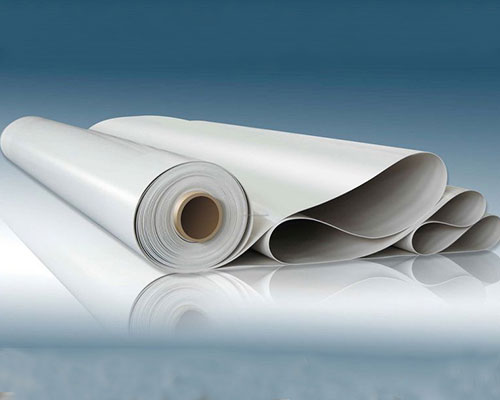
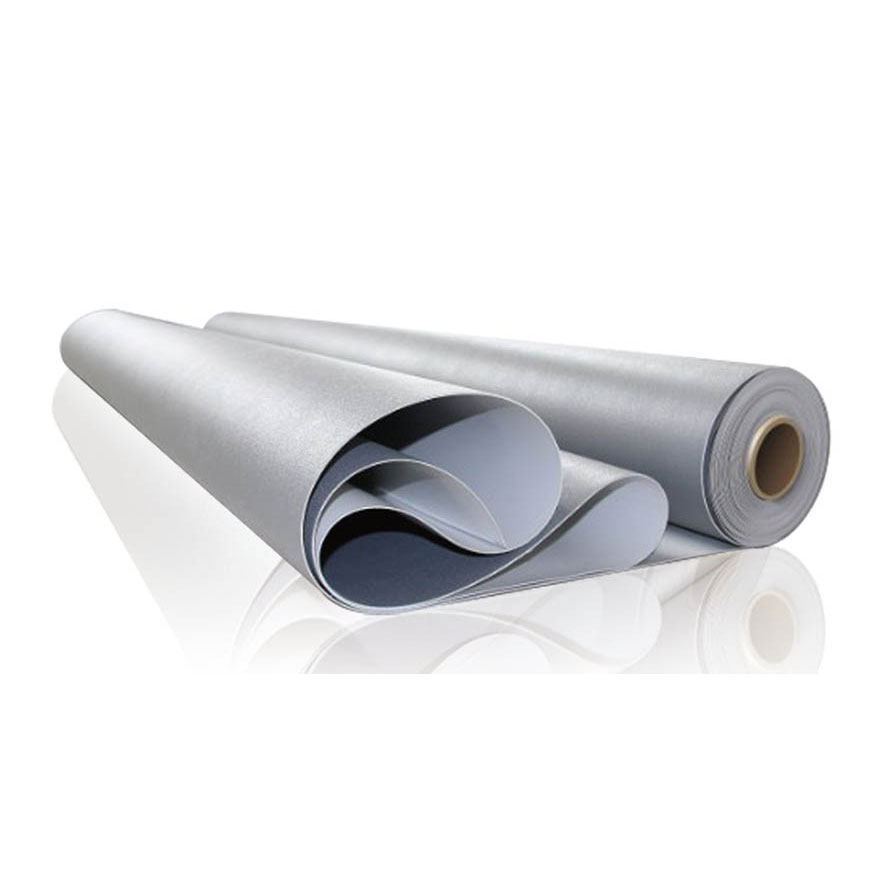
Thermoplastic Polyolefin (TPO) waterproofing membrane (referred to as TPO waterproofing membrane) is an elastomeric waterproofing membrane made of a new type of waterproof material that combines the weather resistance and heat resistance of ethylene propylene (EP) rubber with the weldability of polypropylene. Initially developed in the early 1990s, with the improvement of formula technology and production processes, the product performance has been continuously enhanced, and it has been widely used in developed countries such as North America and Europe. It is currently internationally recognized as an environmentally friendly waterproofing material.
Due to its excellent physical and environmental performance, TPO waterproofing membrane has become the fastest-growing waterproofing material in the world. In the United States, TPO waterproofing membranes have accounted for 30% of the U.S. low-slope commercial roofing material market, with an annual growth rate of more than 25%. In recent years, with the development of mechanically fastened single-ply roofing systems, high-performance, energy-saving, and environmentally friendly TPO waterproofing membranes have also shown a rapid development momentum in China.
Product Specifications
Products are classified by use:
- Reinforced TPO waterproofing membrane (P): Thermoplastic polyolefin waterproofing membrane reinforced with polyester fiber fabric in the middle.
- Composite TPO waterproofing membrane (L): Thermoplastic polyolefin waterproofing membrane with polyester non-woven fabric composite on the lower surface of the membrane.
- Homogeneous TPO waterproofing membrane (H): Thermoplastic polyolefin waterproofing membrane without internal reinforcing materials or backing composite.
Specifications:
| Membrane Thickness (mm) | Membrane Width (m) | Membrane Length (m) |
|---|---|---|
| 1.2, 1.5, 1.8, 2.0 | 1.0, 1.5, 2.0 | 20, 30 |
Product Features
- Advanced polymerization technology is used to combine ethylene rubber and polypropylene, which has both the excellent weather resistance of ethylene rubber and the weldability of polypropylene.
- Special formula technology eliminates the need to add any plasticizers that can make the material brittle, avoiding the embrittlement phenomenon of general thermoplastic membranes (such as PVC) due to plasticizer migration, thus maintaining long-term waterproof function.
- Excellent high and low temperature performance, maintaining flexibility at -50℃ like rubber materials and mechanical strength at higher temperatures.
- High chemical resistance, resistant to acids, alkalis, and salts.
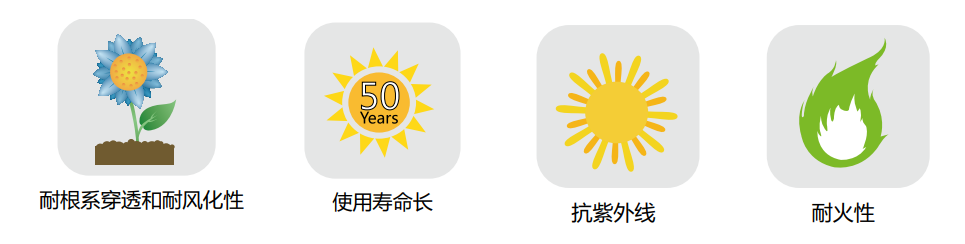
- Excellent root penetration resistance, effective against plants, vegetable oils, and the growth of microorganisms such as bacteria, molds, and yeasts.
- Lightweight material with good dimensional stability.
- Mainly white surface with smooth finish and high reflectivity, having energy-saving effect and anti-pollution property.
- Due to being white, it has good dimensional stability.
- The composition does not contain plasticizers and chlorinated polymers, and no toxic gases are generated or released during welding and use, which is harmless to the environment and human health.
- Hot air welding is used for welding seams, which can form a high-strength sealed butt waterproof layer.
- The reinforced TPO waterproofing membrane has a layer of polyester fiber fabric in the middle, which makes the membrane have good tensile performance, improved tear strength and puncture resistance, and is more suitable for mechanically fastened roofing systems.
- The precisely positioned fabric on the lower surface area of the TPO waterproofing membrane makes the membrane easier to bond with the base structure.
- TPO waterproofing membrane has good weldability and can be processed into various shapes after being heated to adapt to complex node construction methods.
Construction Technology
- Base treatment
- The base must be flat, dry, clean, free of hollowing, sanding, cracking, etc. Snow and ice must be removed from the roof and accumulated water or ice in local systems before laying. Slopes must be provided to prevent delamination of the newly laid roof and retention of moisture or water vapor, and if necessary, to prevent delamination of the newly laid roof.
- Pre-laying of TPO membrane: Lay and adjust the membrane in the predetermined position and make it flat, without stretching the membrane forcefully;
- The membrane should be laid flat and kept naturally relaxed without distortion;
- Fixing of fasteners: The height of the building and the wind speed on the roof determine the specified center spacing and fixing speed of the structural fasteners;
- The TPO membrane should be fixed within a width of 600mm and a range 800mm from the edge, and the number of fasteners should not be more than 6.
- The TPO membrane must be fixed at all peripheral changes of each width, such as gutters, expansion joints, slope changes greater than 1/6, roof corners, skylights, and all pipes and protrusions where sealing measures are taken.
- Use an automatic hot air welding machine or a hand-held hot air welding machine and a silicone resin roller to weld the TPO membrane with hot air. All seams must use precise temperature control to ensure the correct welding temperature. The irregular surface of multi-layer thickness welding of TPO membrane may cause wrinkles.
- The base can be coated with solvent-based or hot-melt adhesive, which should be applied evenly without omission or accumulation (it can also be applied on the surface of the TPO membrane).
- The welding area should be constructed by welding method, with long-side seams welded first, then short-side seams.
- The full adhesion method is suitable for various buildings with cement mortar bases. The construction technology and related procedures are used for various polymer waterproofing membranes bonded with adhesives.
Thermoplastic Polyolefin (TPO) Waterproofing Membrane complies with GB27789-2011 standard
| No. | Item | Index | |||||
|---|---|---|---|---|---|---|---|
| P | L | H | G | GL | |||
| 1 | Tensile Strength (MPa) ≥ | 12.0 | 8.0 | 10.0 | 10.0 | 8.0 | |
| 2 | Elongation at Break (%) ≥ | 200 | 200 | 300 | 200 | 200 | |
| 3 | Tear Strength (N) ≥ | 200 | 150 | 150 | 150 | 120 | |
| 4 | Low-temperature Flexibility | No cracks at -40℃ | |||||
| 5 | Water Impermeability | Pressure (MPa) ≥ | 0.3 | ||||
| Holding Time (min) ≥ | 30, no leakage | ||||||
| 6 | Seam Peel Strength (N/mm) ≥ | 1.5 | |||||
| 7 | Seam Shear Strength (N/mm) ≥ | 1.0 | |||||
| 8 | Heat Aging Treatment (80℃×168h) | No blistering, cracking, bonding, or holes | |||||
| 9 | Heat Treatment Dimensional Change Rate (%) ≤ | 1.5 | 1.5 | 2.0 | 1.5 | 1.5 | |
| 10 | Alkali Resistance (saturated Ca(OH)₂ solution, 168h) | No blistering, cracking, bonding, or holes | |||||
| 11 | Artificial Weathering Aging | No blistering, cracking, bonding, or holes | |||||
| 12 | Tensile Strength Retention Rate (%) ≥ | 80 | 80 | 80 | 80 | 80 | |
| 13 | Elongation at Break Retention Rate (%) ≥ | 80 | 80 | 80 | 80 | 80 | |
| 14 | Low-temperature Flexibility | No cracks at -35℃ | |||||
The artificial weathering aging test duration is 2500h; Types G and GL are only applicable to waterproofing membranes used for exposed applications.