






Polyvinyl Chloride (PVC) Waterproofing Membrane
Product Overview
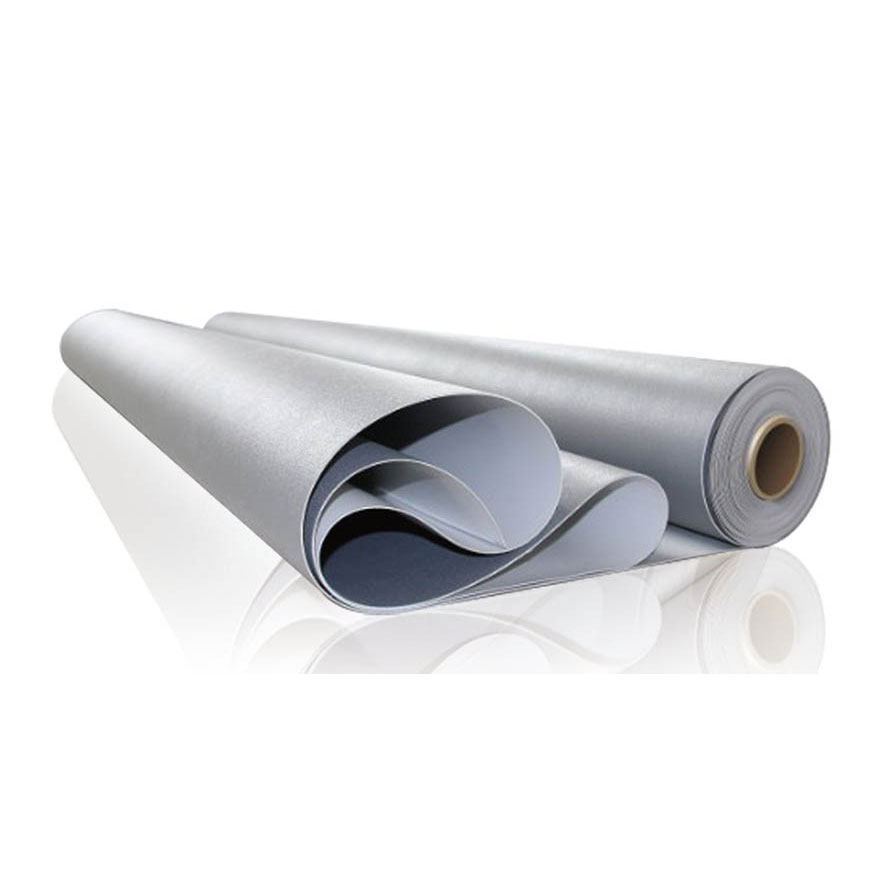
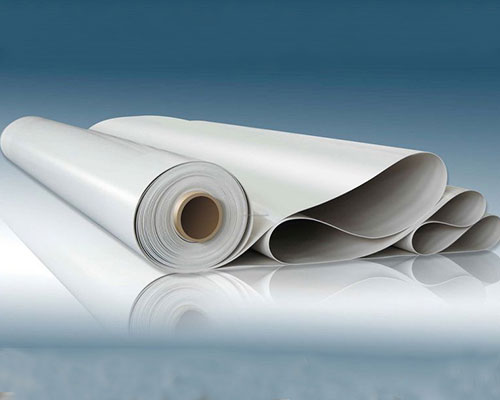
Polyvinyl Chloride (PVC) waterproofing membrane is a high-performance polymer waterproof sheet. It is made from PVC resin as the main raw material, added with plasticizers, antioxidants, stabilizers and other additives, and produced by extrusion method. The product widths are 1.05m, 2.05m, 2.1m, and the thicknesses are 0.8mm, 1.0mm, 1.2mm, 1.5mm, 2.0mm. The standard length is 20m (special specifications can be customized). The product weight can be adjusted according to user convenience. Due to its unique product formula, the service life of this product is much longer than that of general civil materials. The service life of the entire waterproof system is more than 20 years for roofs and more than 50 years for underground applications.
The product is suitable for roof waterproofing of industrial and civil buildings, including planted roofs, flat roofs, sloped roofs; underground waterproofing of buildings; waterproofing of pools, canals, dams and underground equipment rooms; waterproofing of tunnels, caverns, artificial mines, landfills, artificial lakes, etc.
Product Features
- Long service life and good aging resistance. The roof material can be used for more than 20 years, and the underground material can last up to 50 years.
- High tensile strength, high elongation, and small dimensional change after heat treatment.
- Good low-temperature flexibility, adaptable to environmental temperature changes.
- Poor root penetration, suitable for planted roofs.
- Good puncture resistance and impact resistance.
- Convenient construction, wide-width membranes have fewer joints, can be welded, with firm and reliable quality, and are environmentally friendly and pollution-free.
- Strong chemical corrosion resistance, suitable for special occasions.
- Good plasticity, convenient and quick corner processing.
- Light color appearance and low cost.
- Unique surface reflects ultraviolet radiation, the membrane surface absorbs less heat and has a low temperature.
- The membrane has good water vapor diffusivity, is a cold roof material, and the moisture and dampness of the base can be easily discharged.
Construction Technology
- Roof Engineering (GB50207-2002)
- The construction of PVC waterproofing membrane can be carried out only after confirming that the strength, thickness, moisture content and other indicators of the base meet the requirements of national standards and design.
- Lay the PVC membrane in the downwind direction, arrange it naturally on the base according to the outline of the waterproof layer, keep it flat and straight without bending, and lap according to the lap width required by the specification.
- Welding is performed according to the material's welding method, such as mechanical welding, hot air welding, and strip bonding.
- The joints of PVC waterproofing membrane should be straight, flat, firm and tight. Hot air gun is used for welding. During welding, the nozzle is at a 45-degree angle to the welding direction, and the pressure roller is parallel to the weld seam and kept at a distance of about 5mm. The welding edge should have black slurry extrusion, and there should be no skip welding.
- The end of the membrane should be fixed with fasteners and sealed with sealant to ensure good water tightness.
- After the construction of the entire waterproof layer is completed, a comprehensive quality inspection and acceptance should be carried out.
- Underground Engineering (GB50208-2002, etc.)
- The construction of PVC waterproofing membrane can be carried out only after confirming that the moisture content and other indicators of the cushion and enclosure of the underground engineering meet the requirements of national standards and design.
- Different underground construction projects should comply with the GB50208-2002 standard according to the relevant national regulations.
- The lap width of the membrane should not be less than 100mm, and the underground membrane should be constructed by pressing on the upper edge of the membrane.
- Multi-pass welding is suitable for welding joints, and the welding width of each weld should not be less than 100mm.
- The PVC waterproofing membrane should be laid flat and firmly fixed to the foundation without sagging, tightness or damage. The next process can be carried out only after inspection and confirmation.
Polyvinyl Chloride (PVC) waterproofing membrane complies with GB12952-2011 standard
| No. | Item | H | L | P | G | GL | |
|---|---|---|---|---|---|---|---|
| 1 | Middle layer thickness (mm) ≥ | Membrane thickness ≤1.5mm | 1.20 | - | 250 | 0.4 | 1.20 |
| Membrane thickness >1.5mm | 1.00 | - | - | - | - | ||
| 2 | Tensile property | Tensile strength (MPa) ≥ | 15 | 15 | 10.0 | 10.0 | 10.0 |
| Elongation at maximum load (%) ≥ | 200 | 150 | - | - | - | ||
| Elongation at break (%) ≥ | - | - | 200 | 100 | 100 | ||
| 3 | Dimensional change rate after heat treatment (%) ≤ | 2.0 | 1.0 | 2.0 | 0.5 | 0.5 | |
| 4 | Low-temperature flexibility | Without treatment | No crack at -25℃ | ||||
| After heat treatment | No crack at -20℃ | ||||||
| 5 | Water impermeability | Pressure, MPa ≥ | 0.3MPa, impermeable for 20min | ||||
| Holding time | - | ||||||
| No leakage | |||||||
| 6 | Impact resistance (2kg·m) | No water seepage | |||||
| 7 | Joint peel strength (N/mm) ≥ | 4.0 | 3.0 | 3.0 | - | - | |
| 8 | Joint shear strength (N/mm) ≥ | Raw material failure | 3.0 | - | - | ||
| 9 | Tear strength (N) ≥ | 190 | 250 | 250 | - | 220 | |
| 10 | Water absorption (70℃, 168h) (%) ≤ | Sheet | 1.0 | 4.0 | - | - | - |
| Membrane | - | - | 6.0 | - | - | ||
| Tensile strength retention rate (%) ≥ | 85 | 85 | 85 | 85 | 85 | ||
| Elongation at maximum load retention rate (%) ≥ | 80 | 80 | 80 | 80 | 80 | ||
| 11 | Heat aging (80℃×168h) | Elongation at break retention rate (%) ≥ | - | - | 80 | 80 | 80 |
| Low-temperature flexibility | No crack at -20℃ | ||||||
| Appearance | No blistering, cracking, bonding and holes | ||||||
| Joint peel strength retention rate (%) ≥ | 85 | 85 | 85 | - | - | ||
| 12 | Chemical resistance | Tensile strength retention rate (%) ≥ | 85 | 85 | 85 | 85 | 85 |
| Elongation at maximum load retention rate (%) ≥ | 80 | 80 | 80 | 80 | 80 | ||
| Elongation at break retention rate (%) ≥ | - | - | 80 | 80 | 80 | ||
| Low-temperature flexibility | No crack at -20℃ | ||||||
| 13 | Artificial weathering acceleration aging | Appearance | No blistering, cracking, bonding and holes | ||||
| Tensile strength retention rate (%) ≥ | 85 | 85 | 85 | 85 | 85 | ||
| Elongation at maximum load retention rate (%) ≥ | 80 | 80 | 80 | - | - | ||
| Elongation at break retention rate (%) ≥ | - | - | 80 | 80 | 80 | ||
a. Joint peel strength is only required for calendered membranes; b. The artificial weathering acceleration aging time for single-layer weather-resistant membrane products is 2500h; c. Membranes used for non-exposed applications do not require artificial weathering aging tests.